Learning Off the Pages: When It’s Ok to Close the Workbooks

There comes a moment in homeschool life when the books are open… but no one is really learning.
The math problems feel forced.
The reading turns into frustration.
And you’re sitting there wondering, “Is this actually working?”
Here’s your permission slip:
It’s okay to close the workbooks.
In fact, sometimes the most meaningful learning happens when you do.
Quick Shop: Our Favorite Tools for Helping Our Kids Work Off the Pages
Grab your essentials quickly below
- birdhouse kit
- Garden tool set (for girls)
- Garden tool set
- Play Money
- Kids Paint Sets (with apron)
- Let’s Write A Story Starter Book
The Pressure to Stay “On Track”
As homeschool moms, it’s easy to feel like we have to keep up with a plan. A plan that we probably created in our minds before the school year even started. Maybe even before we knew what are daily routine would look like. We start thinking, Ok, we need to cover Language, Math, History, Science, Music, Art, and so on BUT what we don’t think about it is
- We do not have to cover everything everyday
- Just because we bought this workbook doesn’t mean we have to finish it
- I have this lesson plan for the week all figured out but left no time for playdates and activities.
But real learning doesn’t always follow a checklist.
Kids aren’t robots—and neither are we.
When we push through just to “get it done,” we often miss the bigger picture:
Understanding matters more than completion.
What “Learning Off the Pages Really Means”
Learning off the pages isn’t about abandoning structure—it’s about bringing learning to life.
It’s about choosing: Experience over exhaustion. Curiosity over compliance. Connection over completion.
Trust me when I say, I know this is sometimes a lot harder than it seems. I love a good curriculum and knowing what we are learning for the day is already planned out. It really is hard for me to practice what I preach on this matter. I am not blaming it on the public school mindset either, I am blaming it on my love of structure and routine. BUT there is a time and a place when routines need tweaked or changed up completely and that’s when I am seeing that my kids need to have more “off the page learning”.
Signs It’s Time To Close the Workbook
When you are unsure when to pivot or tweak your routine, here are some clear signs:
1. Everyone is frustrated
Tears, resistance, or constant distractions usually mean it’s not sticking anyway.
2. You’re just checking boxes
If the goal becomes finishing pages instead of understanding, it’s time to pause.
3. Your child is disengaged
Staring off, rushing through, or saying “this is boring” are all clues.
4. You’re feeling overwhelmed
Your energy matters too. A reset can change the whole tone of your day.
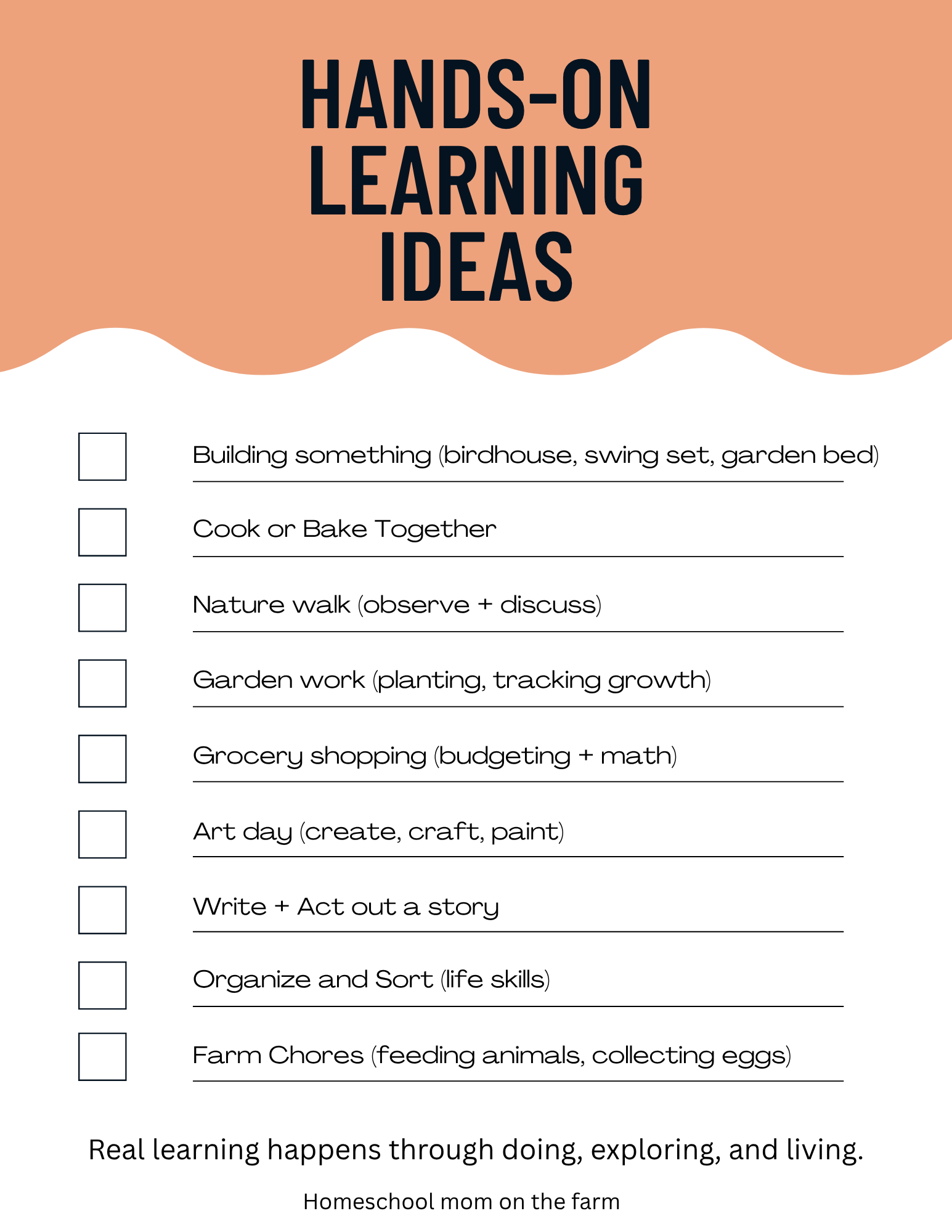
Real Life Learning Ideas (That Actually Stick)
This is where I see the magic happen.
Here are simple ways to shift into hands-on learning:
Build Something Together
Work on a project like a swing set, birdhouse, or garden bed – If it wasn’t for my son just today telling me “Mom, I need to work outside my math workbook,” I wouldn’t have gotten this amazing reminder that he can actually do that. I said “YES” and he started measuring and making a blueprint for a new swing set. His little mind was just going 100 miles a minute and I got to see the excitement in his face come back. He is super excited to learn about the different types of math he will need to use when building this new swing set. He doesn’t even realize it’s not just math that he will be using. For younger kiddos, these bird house kits are absolutely adorable and super fun to build and paint together. Bird House Kit. Also don’t forget those gardening tools to include your kids. Garden Tool Set
- Math: measuring, counting, angles
- Science: structure, tools, materials
- Life skills: problem-solving
Farm & Home Life – Our kids have a short list of chores inside and outside our house. They sometimes get frustrated and don’t understand why they have these chores. I love to remind them that with these chores comes responsibility. Responsibilities help them with self-discipline while boosting self-esteem. Here are some ways they are learning again, without even knowing.
- Feeding animals (responsibility + biology)
- Gardening (science + patience) My kids loved these little garden tool sets
- Cooking meals (fractions + reading + life skills)
Everyday Errands – Now I know we all need some time to ourselves and I am really good at taking that time when I want to go grocery shopping BUT sometimes I need to remind myself that these normal outings can be turned into lessons.
- Grocery shopping (budgeting, math) (play money is great for playing store at home)
- Post office (communication, systems)
- Banking (real-world money skills)
Creative Learning – This is by far my daughter’s favorite part of homeschooling. I am not an art kind of person, and I hate messes, but when she wants to start painting or crafting, I let her imagination run free. I think these are important skills for our kids to have and sometimes I have to look past the paint on the table or craft stuff laying all over the floor to see the beauty in the project she has created.
- Painting, crafting, building (don’t forget your kids paint sets)
- Writing stories or acting them out (check out these Let’s Write a Story Starter Books)
- Music and movement
The Hidden Benefits of Hands-on Learning
When you step away from the workbook, you often gain:
Deeper understanding – kids tend to retain more from actively learning (doing) than by passively reading or instruction. Kids remember what they experience.
Confidence
They see that they can apply what they learn in real life.
Stronger relationships
Learning together builds connection—not just knowledge.
A love for learning
And that’s the goal, right?
But What About “Falling Behind?”
This is one of the biggest fears—and let’s be honest, it’s real. But here’s the truth:
You’re not falling behind—you’re choosing a different path.
Learning is not a race. There is no finish line your child must cross at the exact same time as everyone else.
And often, when kids return to structured work after a break,
they understand it faster, better, and with less push back.
Finding the Balance
Let me start off by saying this first – This isn’t about throwing away your curriculum. It’s about knowing when to pivot.
You can:
- Use workbooks as a guide, not a rule
- Take “off-page” days when needed
- Follow your child’s interest when it sparks
- Trust your instincts as their parent/teacher
Because you know your child better than any curriculum ever could.
A Gentle Reminder for Homeschool Moms
If today didn’t go as planned…
If the books stayed closed…
If learning looked different than you expected…
You’re still doing enough.
Actually—
you might be doing exactly what your child needed.
If you’re new to homeschooling or in the elementary years and looking for support — you’re in the right place.
And alongside this blog, I host the podcast It’s a Beautiful Day to Homeschool, where we go even deeper into the real-life side of homeschooling.
For more information on starting homeschooling, please check out “The Beautiful Beginning” A Starter Guide for New Homeschool Moms. Available on amazon as a kindle ebook and physical copy or buy off my website for your digital download.


Some of the links below are affiliate links, which means I may earn a small commission at no extra cost to you.